
Dry Season
June – October
Cool, dry and prime safari time. Thin vegetation and concentrated water sources make wildlife easy to find; the Great Migration river crossings usually fall here.
Travel Guide
The practical side of the dream.
Visa & Entry
Most visitors can enter Tanzania on an e-visa arranged in advance, or a visa-on-arrival at major airports and land borders. The e-visa is the smoother option. Apply online before you travel and print the confirmation to present on arrival. The process is usually quick when paperwork is in order.
Your passport must be valid for at least six months beyond your date of entry and have a blank page for stamps. You will also be asked for proof of onward travel, so have your return ticket or next destination handy.
Note: visa requirements, fees and eligible nationalities change. Please confirm current rules with your nearest Tanzanian embassy or the official immigration portal before you travel. This is general guidance only.
Health & Vaccinations
Make sure your routine vaccinations are up to date, including measles, tetanus and diphtheria, polio and hepatitis A are commonly recommended for travel in East Africa. A Yellow Fever vaccination certificate is required if you are arriving from a country with risk of Yellow Fever transmission, so check your itinerary carefully.
Tanzania's safari regions have malaria risk, so discuss prevention with a travel health professional, alongside simple habits like long sleeves at dusk, insect repellent and closed sleeping quarters. Comprehensive travel insurance that covers medical evacuation is strongly recommended for any safari trip.
Note: We are guides, not doctors. Please consult a travel clinic or your physician for personalised medical advice, current vaccination requirements and any prescriptions. This is general guidance only.
When to Go
Tanzania is rewarding year-round, and each season simply changes the story the bush is telling.
June – October
Cool, dry and prime safari time. Thin vegetation and concentrated water sources make wildlife easy to find; the Great Migration river crossings usually fall here.
November – December
Brief, mostly afternoon showers that freshen the landscape. Fewer visitors, lush green photography and good value, with wildlife still very visible.
January – March
Warm and green. Calving season on the southern Serengeti plains brings predator action and a surge of newborns, which makes it a photographer's dream.
April – May
The heavy rains. Some remote camps close and roads get tough, but rates drop sharply and the bush is at its most beautiful and private.
What to Pack
Travel light and layer up. Soft bags are easier to stow in a safari vehicle than hard cases.
Money & Tipping
The local currency is the Tanzanian Shilling (TSh), but US dollars are widely accepted for tourism services, park fees and lodges. Bring post-2013 notes in good condition, as older or torn notes are often refused.
Cards work at most lodges and larger hotels, but carry cash for park entry, villages, markets and tips. ATMs are reliable in Arusha and Dar es Salaam but scarce once you are out on safari, so stock up in town.
Tipping is customary and genuinely appreciated. These ranges are a sensible starting point, so adjust it to the level of service you received.
| Role | Suggested |
|---|---|
| Safari Guide | $20 – $30 per day |
| Lodge / Camp Staff | $10 – $15 per day |
| Driver / Transfer | $5 – $10 per transfer |
Getting Around
Distances between parks are large, so most itineraries combine two ways of moving. Scheduled and charter bush flights link Arusha, the Serengeti, Tarangire, Lake Manyara and Zanzibar in under an hour each hop, with light aircraft landing on dirt airstrips close to your camp.
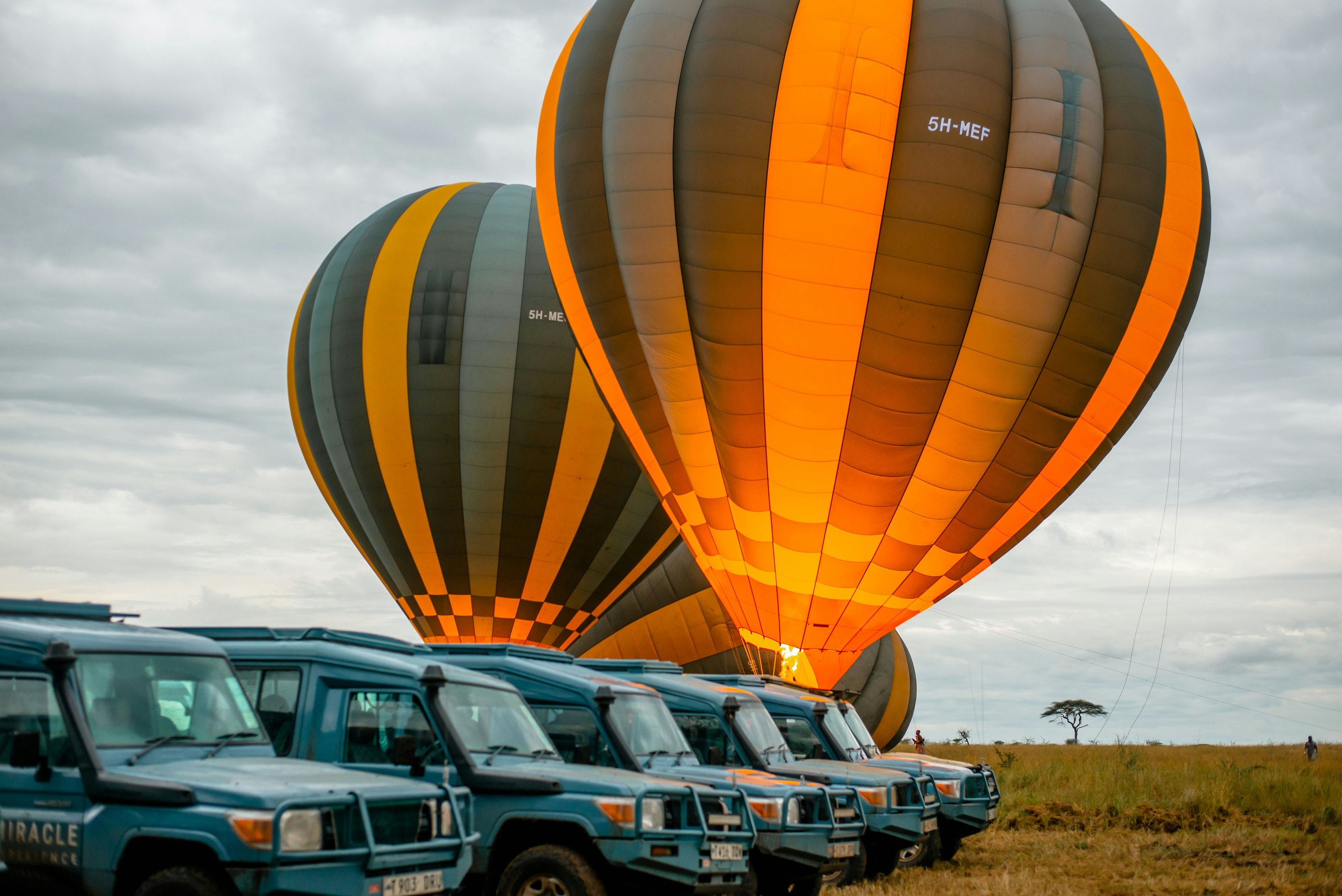
On the ground, private 4x4 Land Cruisers are the safari standard, with high seating for spotting, open roof hatches for photography and the clearance to handle the rainy season tracks that smaller vehicles cannot. Your guide stays with you throughout, reading the bush as you go.
Road transfers handle the shorter legs, from airport to Arusha and Arusha to Tarangire, crater rim to Lake Manyara, and we time them to miss the dust and catch the light.
Scheduled or charter light aircraft between parks and to Zanzibar. Fast and scenic.
Open-roof Land Cruisers with your own guide for every game drive and transfer.
Short legs handled by 4x4, timed to skip the dust and catch the best light.
Safety Tips
Safari is remarkably safe when you follow a few simple, common-sense rules. Your guide is the final word in the bush.
On game drives, remain seated and inside the vehicle at all times unless your guide explicitly says it is safe to step out.
The equatorial sun is fierce. Drink water constantly on drives, reapply sunscreen and cover up during the middle of the day.
Always ask before photographing people, respect no-photo zones and avoid using flash near wildlife or inside villages.
Use lodge safes, carry only what you need on game drives and keep cash and documents split between bags.
Every journey is different, and that's exactly the point. Tell us how you like to travel and we'll handle the details, from visas and flights to packing and all.